


Here for you
Posted on 1 March 2021
Since March 2020, Mediclinic hospitals across Southern Africa have rallied to fight a new and at times mysterious disease. So have you.
A nurse who has dedicated her entire working life to helping others.
A firefighter, who had to learn to walk, all over again.
A fierce elderly lady, over a 100 years old, who was born at the height of the Spanish Flu pandemic. And a baby boy, born dangerously early, who spent two months in hospital.
These four people are more than patients. They are role models. In dramatically different shapes and sizes, they are success stories. Survivors. They are healthy. They are happy, and back at home, after surviving the effects of a global pandemic and unprecedented public health crisis thanks to innovative, adaptive and above all expert care. They are proof of a process that works.
WE ARE PREPARED
When the World Health Organization declared the COVID-19 outbreak a global pandemic in March 2020, two challenges became immediately clear: while members of the public called into their nearest hospitals to find out more about the disease and to understand their risk profile, healthcare workers were at risk of being exposed while working with patients. Mediclinic’s response was swift, and future-focused.
Understanding that members of the public didn’t have accurate information about COVID-19 within those initial weeks, and certainly didn’t know with certainty whether they qualified for testing, Mediclinic’s COVID-19 disease task force used cutting-edge technology to make this information readily available, in just a few hours.
Mediclinic’s cutting-edge online COVID-19 screening portal translates complex sets of clinical
and epidemiological criteria into a straightforward, easy-to-understand online questionnaire. This tool empowers the user to access location-specific, clinically reliable medical advice on who should be tested, when and where. In a matter of days, South Africans had a quick, easy source of trustworthy answers to urgent questions.
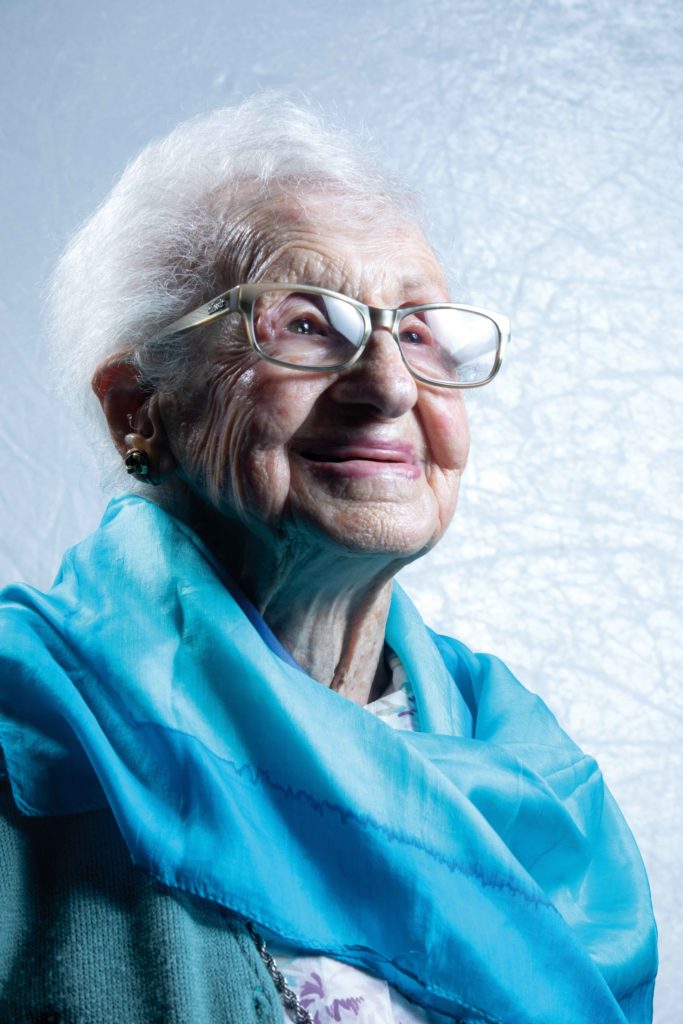
Bertha Meltzer was born in 1917 in the Free State, after her parents had come to South Africa from Latvia, she grew up in the midst of the Spanish Flu, a deadly influenza pandemic caused by the H1N1 influenza A virus that infected an estimated third of the world’s population at the time.
Today, she is 104 years old. Fiercely protective of her independence, she goes for regular walks, plays bridge, loves reading and has a reputation for having been an excellent bowls player in her day. But on 15 July, she “just didn’t seem herself”, says her grandson, Lionel. She was admitted to Mediclinic Cape Town and diagnosed with dysentery, pneumonia in both lungs and COVID-19 by pulmonologist Dr Neville Govender.
“It came as a shock,” says Lionel. “It’s one of those things you think will happen to someone else, never to your family. We were very concerned. That weekend was critical. If she made it through, there was hope that she would survive.”
Another challenge: Bertha is a sociable, maternal lady, who missed regular contact with her extended family. Mediclinic Cape Town rose to the occasion by setting up video conference calls with her sons and grandson in the United Kingdom. Lionel says the family appreciated the regular communication the most. “There was no euphemistic language. I didn’t ever feel out of the loop; they called us before we thought to call them. It was a great comfort to know she was in expert hands.”
Ten days after being admitted, Bertha was discharged, as nurses lined the halls to give her a well-earned guard of honour. “It was emotional. Overwhelming. It shows you just how caring they are. We can’t really appreciate enough what healthcare workers go through, and what they do.”
WE ARE PROACTIVE
The COVID-19 pandemic has given healthcare workers and hospital employees in South Africa a unique challenge. On the frontline of a global public health crisis, they were tasked with treating an influx of patients showing signs of a disease that, for a long time, was not fully understood.
Protocols around the use of personal protective equipment (PPE) were new, unfamiliar and regularly evolving, worldwide. Nurses and doctors were at risk of infection when going to work, at risk of taking the disease home, and at risk of stigma when with friends or family.
That is a lot of risk, and it takes a mental toll. Knowing COVID-19 would have a negative impact on the mental health and wellbeing of employees by bringing new challenges to their lives, Mediclinic’s human resources department rallied to support the needs of frontline healthcare teams.
They launched a series of company- wide mechanisms and initiatives, including internal communication, education campaigns and regular leadership briefings, with one goal: to equip employees, doctors and allied health professionals with the means to cope with the negative psychological effects of the pandemic, such as traumatic stress, burnout and compassion fatigue.
While hospital employees have access to telephonic and individual professional psychological counselling via two 24/7 external support helplines, the industrial psychologists and clinical specialists in the HR division also facilitate regular face-to-face and virtual employee wellbeing support sessions for frontline employees as part of a targeted support campaign.
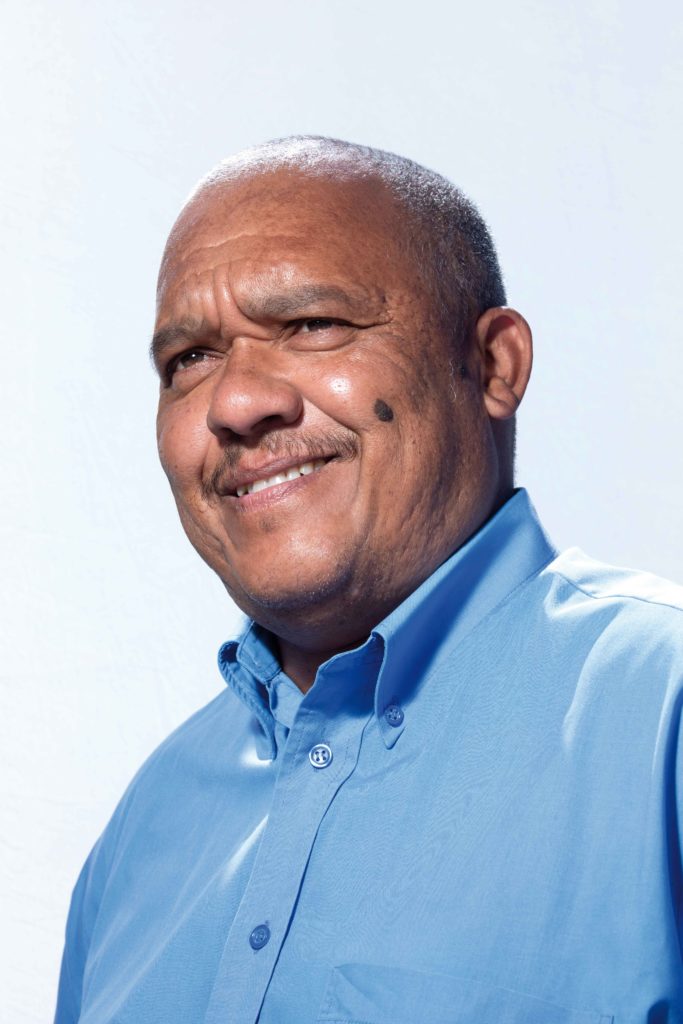
Deon Arnoldus is a firefighter, well accustomed to throwing himself into hazardous crises for the sake of others.
But COVID-19 was on another level, he says. “I don’t remember much. I know from what people have told me. While I was laying in bed I started to make funny noises, my wife said. And the nurses tell me while I was sedated, I was fighting them, trying to pull out the intubation tubes. That’s not like me.”
He was in the intensive care unit for 53 days. During that time, doctors were learning on their feet, says Dr Pierre Tredoux, Deon’s physician at Mediclinic Durbanville. “I used to tell the families of my patients, when I spoke to them over the phone to give them updates, that when you run into issues when treating COVID-19, you can’t go back into the textbooks for guidance, yet,” he says. “We relied on support from one another. It made all the difference.”
“From the moment this disease was first reported in South Africa, local professors of infectious medicine in the state sector started a WhatsApp group for physicians who would be managing patients of coronavirus disease. It sounds like a small thing, but those discussions grew and grew, over time and gave us access to cutting-edge ways to combat an evolving crisis.”
Physicians became involved in ongoing discussions, meeting regularly to discuss emerging guidelines and constantly sharing their own, anecdotal experiences via WhatsApp and over the phone. This spirit of collaboration helped grow an emerging clinical body of knowledge.
“When we stand up to fight for our patients,” he says, “sometimes that means standing up and asking for help. That’s how we stand together. In the end, even though it was my name on Deon’s patient forms, he was treated and cared for by a huge team of dedicated professionals.”
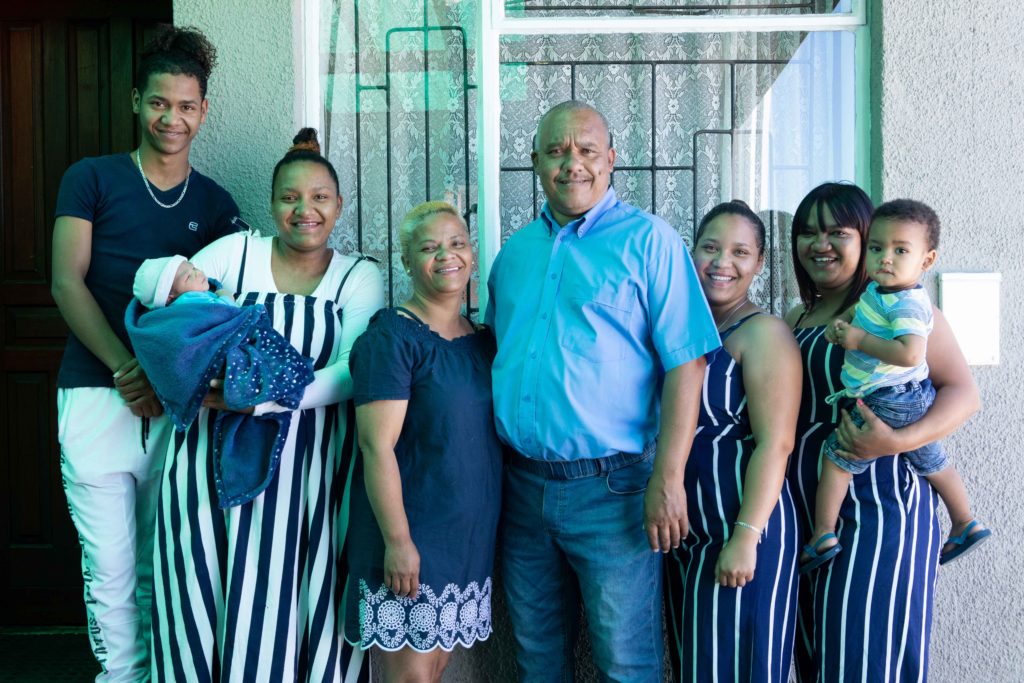
After six weeks in ICU, Deon spent another three in a step-down facility, where he learnt how to walk again. His reward? Seeing his family again. “I was so weak and I could not even lift my phone to call my family. I was missing them so much. I told myself I must get better, so I pushed myself to get better. Being able to see my family again was my biggest motivator.”
WE ARE POSITIVE
The great thing about South Africans is we pull together when we need to, says Dr Tredoux. “Teamwork. That’s the name of the game against COVID-19.” As early as January 2020, Mediclinic’s coronavirus disease task force had noticed from global patterns that both public and private stakeholders in the healthcare industry had faced numerous challenges in sourcing high volumes of crucial medical equipment that is of appropriate quality – a situation made all the more urgent by growing demand, and subsequent shortages, all over the world.
This is why Mediclinic began planning for an effective in-hospital response long before COVID-19 was first reported in South Africa. Mediclinic expedited the regular replacement process for ventilators across its local hospitals, ordering the new equipment required ahead of schedule, and optimised the layout of hospital intensive care units to accommodate both additional ventilators and necessary nursing personnel.
Mediclinic also invested in temperature thermometers specifically for the screening environment, including mobile testing units and hospital access areas, and additional, handheld video laryngoscopes that allow doctors a close-up look at a patient’s airway during the intubation process. In line with a new universal masking policy, nurses and other health workers were provided with surgical masks, aprons, visors and gloves for use where appropriate within the hospital, while all other staff in non-clinical areas were given cloth face masks.
At the same time, Mediclinic’s cutting-edge virtual screening tool adapted to give hospital staff an additional layer of protection. Healthcare workers access the hospitals, nationwide, through a series of streamlined access control measures conducted by smartphone.
Once someone is captured into the screening portal they are regularly monitored and invited to connect online, via a real-time messaging platform that effectively authorises staff for entry based on their assessment results. This gives staff and hospital management an automated, adaptive way of engaging with staff members day by day.
In this way, staff are able to have their own symptoms and vital signs monitored, daily, remotely. This alleviates the burden of memorising and agonising over potential early warning signs, and grants them
the peace of mind of knowing their colleagues are infection-free.

Mediclinic is a family, says Dr Marius Wasserfall, a physician at Mediclinic Panorama, and the hospital group’s response to COVID-19 was formulated with that in mind. “From the executive management all the way down to us on the floor, the measures have been designed to keep staff and patients safe. The screening criteria, the hand hygiene, the masks and respirators, the guidelines on how, when, where and why to use them – these were all in place from the beginning. There was no doubt. We knew that we had what we needed, and what it takes, to protect each other.”
Christine Williams has been a nurse at Mediclinic Panorama ever since she left school. “When I started training to become a nurse, through the Mediclinic Learning Centre, I didn’t know what I was getting myself into,” she says. “It was exciting. Looking back – whew. It’s a career that is a calling.” Christine was 33 weeks pregnant when she began feeling unwell. “It started with an itchy throat, which became a cough. Fever, loss of taste and smell, and chills. In a few days, I had all the symptoms. For me, the worst part was the shortness of breath. Because you can’t breathe, it makes you anxious, and now you are even more short of breath. It’s a vicious cycle, and it gets to you.”
Most of that stress was about the health of her baby, she explains. “There were a lot of unknowns. We were pretty far in the pregnancy, but not far enough that it would be safe for him to come early. Being pregnant, with coronavirus disease, what does that mean for my baby? For me?”
That stress was tangible in the hospital too, says Dr Wasserfall. “A young mom with an unborn child, this is naturally stressful, of course. If you deliver the baby too soon, there is a risk to the baby, but if you deliver too late, there’s a risk to the mom. On top of that, Christine has been with us for a long time. Our staff and our patients – there is a real connection there. And she is part of that family.”
Just as tangible was the relief when Christine was discharged, holding her healthy new boy, surrounded by cheering nurses and staff. “He came out nice and pink, and shouted the roof off. There was absolute elation throughout the hospital.”
Christine had never before been admitted to hospital, and was overwhelmed by the support from her colleagues. “Looking back, nursing was a good decision. I can see the important part we play for our patients. I can’t imagine ever doing anything else.”
When Levin Brown was born at Mediclinic Paarl via emergency Caesarean section at 27 weeks, he weighed 800 grams. He also had COVID-19, contracted from his mom, Lucinda. It was a shock, she says, as she herself was asymptomatic.

Levin spent 67 days in ICU, where he was nursed to a healthy 2kg. At that point, he could go home. “He’s just such a pleasure – he doesn’t fuss. He doesn’t give us any trouble at all. He knows he belongs here.”
Mediclinic’s response to the COVID-19 pandemic has been focused on fighting for a brighter, better future. The kind of future that brings together physicians and firefighters, nurses and centenarians, where our family is your family. A future where a baby boy can be born dangerously premature, diagnosed with a new and mysterious disease, and not only survive, but thrive.
“When people meet him they say he could be a celebrity,” says Lucinda proudly. “He could be president one day.”
WE ARE HERE FOR YOU


Share
Related articles


